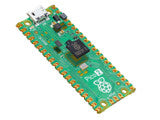
Raspberry Pi Pico 2
Raspberry Pi Pico 2
Product features
Product features
RP2350 Dual-Architecture Microcontroller: Powered by Raspberry Pi's custom RP2350 chip, featuring a unique dual-core Arm Cortex-M33 paired with dual-core Hazard3 RISC-V processors (selectable at boot), running at speeds up to 150 MHz.
Upgraded Embedded Memory: Equipped with 520KB of internal SRAM and 4MB of onboard QSPI flash memory, doubling the memory capacity of the original Pico for more complex codebases and DSP operations.
Enhanced Hardware Security: Built-in Arm TrustZone technology, secure boot capability, SHA-256 hardware acceleration, and 8KB of OTP storage for protected key management and anti-tamper security.
Programmable I/O (PIO) Expansion: Includes 3 PIO blocks (12 total state machines) allowing engineers to build flexible, high-speed bit-banging hardware protocols directly without CPU overhead.
Form-Factor Backward Compatibility: Maintains the exact same 40-pin layout, DIP pinout footprint, and castellated edges as the original Raspberry Pi Pico for instant hardware drop-in upgrades.
Materials and care
Materials and care
PCB Composition: Built on a multi-layer FR4 fiberglass circuit board featuring gold-plated castellated pads, designed for both through-hole header pin attachment and direct SMD carrier board mounting.
Static Handling Precautions: Highly sensitive to Electrostatic Discharge (ESD). Ground yourself or use anti-static wrist protection, and hold the unit by its fiberglass outer edges during assembly.
Soldering Guidelines: Maintain proper soldering temperatures on the castellated edge pads to prevent thermal damage to nearby surface-mount components or pad trace lifting.
Environmental Limits: Operating temperature range is -20°C to +85°C. Keep protected from liquids, condensation, and conductive dust while powered.
Merchandising tips
Merchandising tips
Drop-in RP2040 Upgrade Pitch: Market this board to existing Pico developers as a massive upgrade delivering higher clock speeds, double the memory, and advanced hardware security features while remaining completely drop-in compatible.
RISC-V Prototyping Value: Highlight the dual Hazard3 RISC-V architecture capability to attract developers and universities looking to experiment with open-standard RISC-V instruction sets on an affordable board.
Essential Prototyping Add-ons: Cross-sell 0.1" Male Pin Headers, Micro-USB Cables, and Breadboards so customers have everything needed to start prototyping out of the box.
Software Ecosystem: Highlight complete support for C/C++ SDK, MicroPython, and CircuitPython to ensure broad accessibility for both beginners and professional embedded engineers.
Couldn't load pickup availability
Share